



Green Friday:
a responsible alternative to Black Friday
What is Green Friday and why is it called theanti-Black Friday?
Because this eco-responsible initiative aims to counter Black Friday, a symbol of commercial frenzy, and promote more reasoned consumption.
By raising awareness of the social and environmental impact of our purchases, Green Friday® proposes sustainable solutions and invites everyone to become a consum’actor.
Far from making us feel guilty, this movement encourages us to explore alternatives to over-consumption. But what makes this trend different? Here’s how.
What is Green Friday?
Although less popular than Black FridayGreen Friday is gaining ground in public opinion thanks to campaigns run by eco-responsible players.
The origins of Green Friday
Green Friday® was born in 2017 from the meeting of two committed networks:
- Envie, a federation that promotes the repair and re-use of household appliances, while fostering professional integration;
- Altermundi, a pioneer in responsible commerce.
Faced with the rise of Black Friday in France, Altermundi chose to forego discounts and donate part of its sales to an association. For its part, Envie highlighted discounts on recycled products to promote re-use.
In 2018, with the support of Paris City Hall and its SSE (social and solidarity economy) office, the two founders made Green Friday® official, reinforcing their commitment to responsible consumption.
Constantly evolving
Since its creation, the movement has gone from strength to strength. Today, it brings together committed associations and companies such as :
- Emmaüs France ;
- Réseau francilien du réemploi (Refer) ;
- DreamAct;
- Ethiquable ;
- Resources ;
- RREUSE.
Participant commitments
To join Green Friday, companies must respect a charter of commitment that includes :
- Black Friday ban;
- 10% of the day’s sales will be donated to associations dedicated to sustainable development;
- raising customer awareness of sustainable consumption practices;
- organizing educational or awareness-raising workshops.
Green Friday objectives
The movement aims to draw attention to the consequences of overconsumption:
- pollution (digital, freight transport) ;
- excessive waste production;
- overexploitation of natural resources ;
- human exploitation and degrading working conditions.
Black Friday is thought to have a huge impact on the planet. Over-consumption uses up too many limited resources, and it also has a social impact on the people who make these products.
The general manager of the Altermundi brand, co-founder of Green Friday
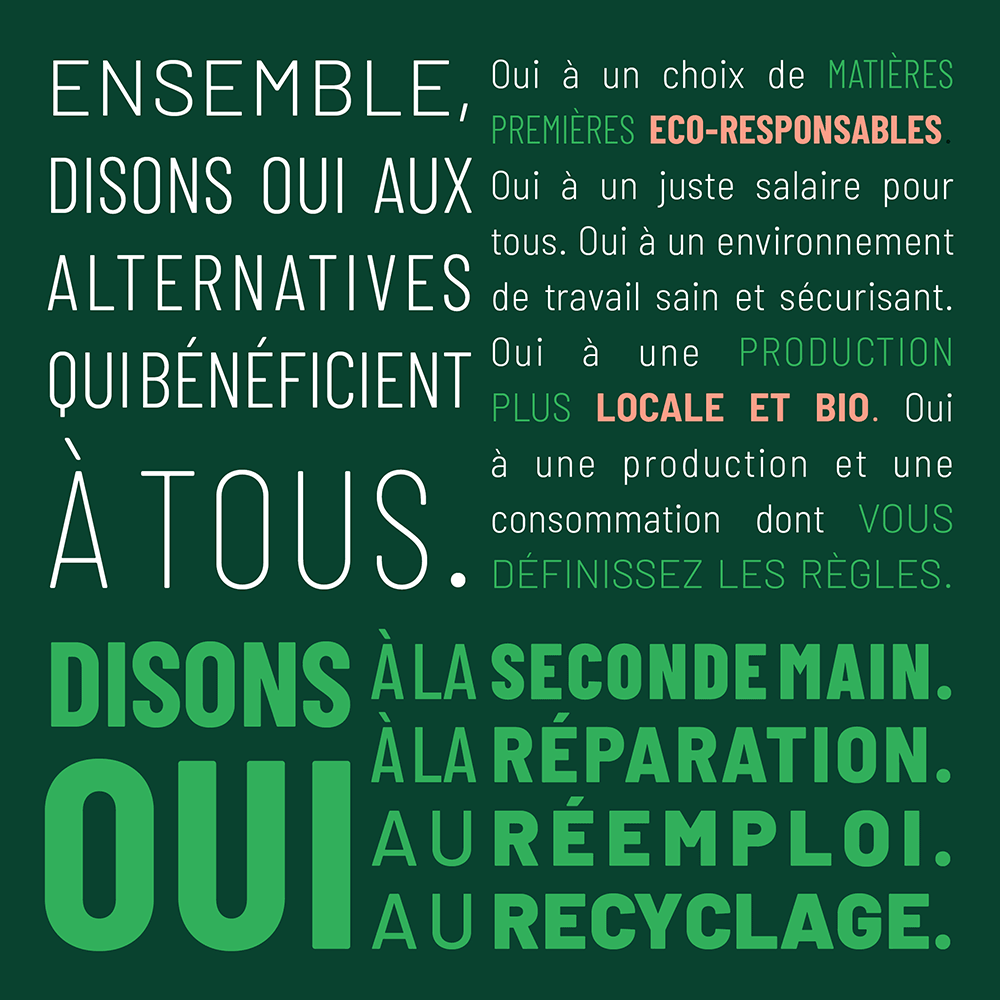
At the same time, Green Friday promotes more sustainable practices:
- buy local ;
- second-hand ;
- recycling ;
- reuse ;
- repair rather than buyback;
- giving or bartering, etc.
❎ While Black Friday encourages impulsive and often unnecessary purchases, Green Friday draws attention to the urgent need to change our consumption patterns and adopt more ethical, reasoned and responsible consumption.
Envie
Alternatives to Black Friday
Green Friday is not the only initiative to combat over-consumption. Here are some other outstanding examples:
Make Friday Green Again
Launched in 2019 by the Faguo brand, this movement brings together over 1,000 companies that refuse to participate in Black Friday. These brands encourage their customers to sort, repair, donate or recycle their unused items, in order to consume less, but better.
Giving Tuesday
An alternative to Black Friday and Cyber Monday, Giving Tuesday is all about generosity. This international movement encourages people to donate (time, money, objects, food, blood, etc.) to support charities, under the hashtag #GivingTuesday.
Buy Nothing Day
Born in Canada in the 90s, Buy Nothing Day is an invitation to give up all purchases in order to reflect on our consumption habits. A radical but effective approach.
Local Friday
This initiative promotes local purchasing, supporting the local economy while reducing the carbon footprint.
Ademe’s “devendeurs
As a logical follow-up to its SERD (Semaine Européenne de la Réduction des Déchets – European Week for Waste Reduction) initiative, which has just come to an end, Ademe has launched a campaign encouraging consumers to ask themselves the right questions before making a purchase.
<The Cottage Parks proposition: buy an experience
Why not offer an experience rather than a product that will end up in the back of a cupboard?
Our network of campsites is offering a promotion of up to -15% on off-season stays at its eco-chic campsites.
A way to add value to a vacation:
- more eco-responsible,
- with a lower carbon footprint.
The limits of anti-Black Friday initiatives
Despite their benefits, these movements face several obstacles:
- advertising pressure that encourages consumption;
- the risk of greenwashing, with insincere commitments;
- well-established consumer habits.
Between 55% and 80% of French people still plan to take part in Black Friday.
Franck Lehuede, consumer trends expert (Crédoc)
A growing trend
Despite these challenges, Green Friday continues to expand internationally, driven by a collective awareness of the importance of consuming differently to preserve the future.
More than just a day, Green Friday is a state of mind that promotes responsible consumption and a transition to a more sustainable economic and social model.
Let’s go green!
[Bonus] A few tips from Green Peace :
| 1. Trade in your clothes instead of buying new 2. Buy second-hand items 3. Make your own cosmetics 4. Share, lend, give 5. Shop with a list 6. Say no to unnecessary packaging 7. Be a role model for others |