




Vacations and disability:
the PMR camping solution
Today, we’re talking about vacations and disability. Because while vacations are a precious time for relaxation, discovery and sharing, they also present additional challenges for people with disabilities and their carers.
Yet it is essential to ensure that these moments of respite are accessible and inclusive for all. Thanks to adapted facilities, specialized structures and a growing awareness of the specific needs of travelers with disabilities, it is now possible for them to go on vacation with greater peace of mind.
As a network of campsites with strong family values, we’d like to invite you to discover a campsite adapted for people with reduced mobility (PRM).
In this article, we propose a few criteria and tools to help you in your choice of accommodation. It will also provide some food for thought for outdoor hospitality professionals… Let’s move towards more inclusive tourism!
What is a PMR campsite?
A PMR campsite is one that has designed or adapted its infrastructure to accommodate people with disabilities. These campsites comply with specific standards and offer a range of equipment and facilities designed to guarantee comfort, safety and independence:
- Adapted, flat, spacious pitches with easy wheelchair access;
- sanitary facilities (walk-in showers, grab bars, sinks adapted to different heights);
- suitable accommodation (mobile homes, chalets or bungalows that meet the needs of wheelchair users, with functional living areas);
- accessible routes (obstacle-free paths, ramps and appropriate flooring);
- additional services (equipment rental (beach wheelchairs, lifts), staff trained to welcome PRMs, etc.).
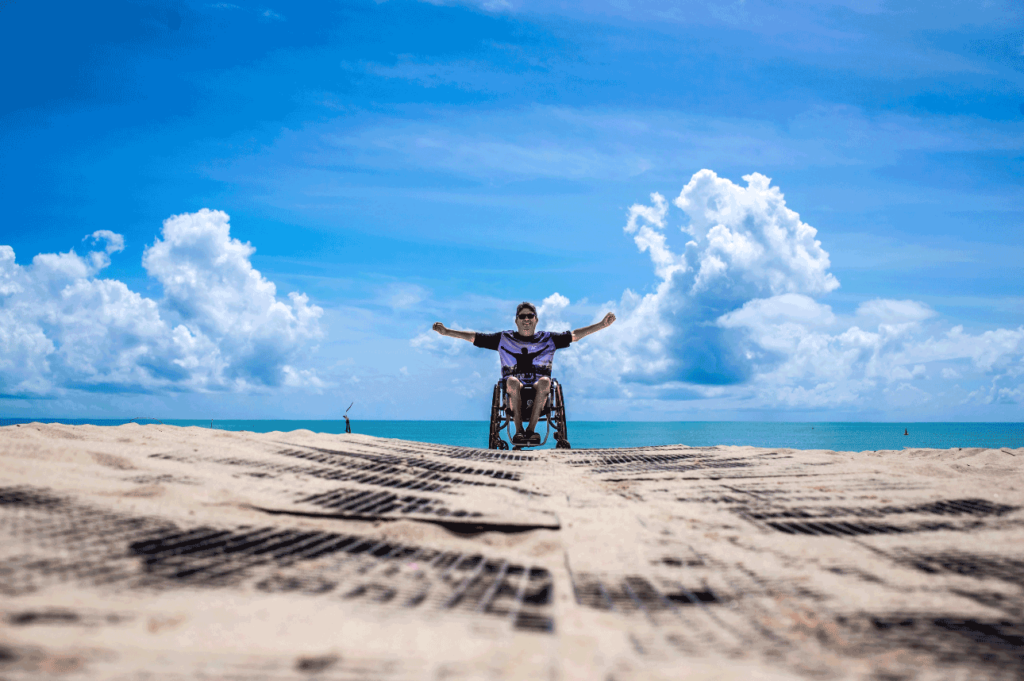
Why choose a PRM-friendly campsite?
For comfort and autonomy
You can enjoy your vacations with greater peace of mind, thanks to a reduction in the constraints associated with a disability, either your own or that of your loved ones.
For enhanced safety
Special features guarantee the safety and well-being of disabled people.
For accessibility
Access to the campsite facilities is completely independent.
For inclusion and sharing with family and friends
PRM-friendly campsites are friendly places where you can share good times with your loved ones, for an inclusive experience.
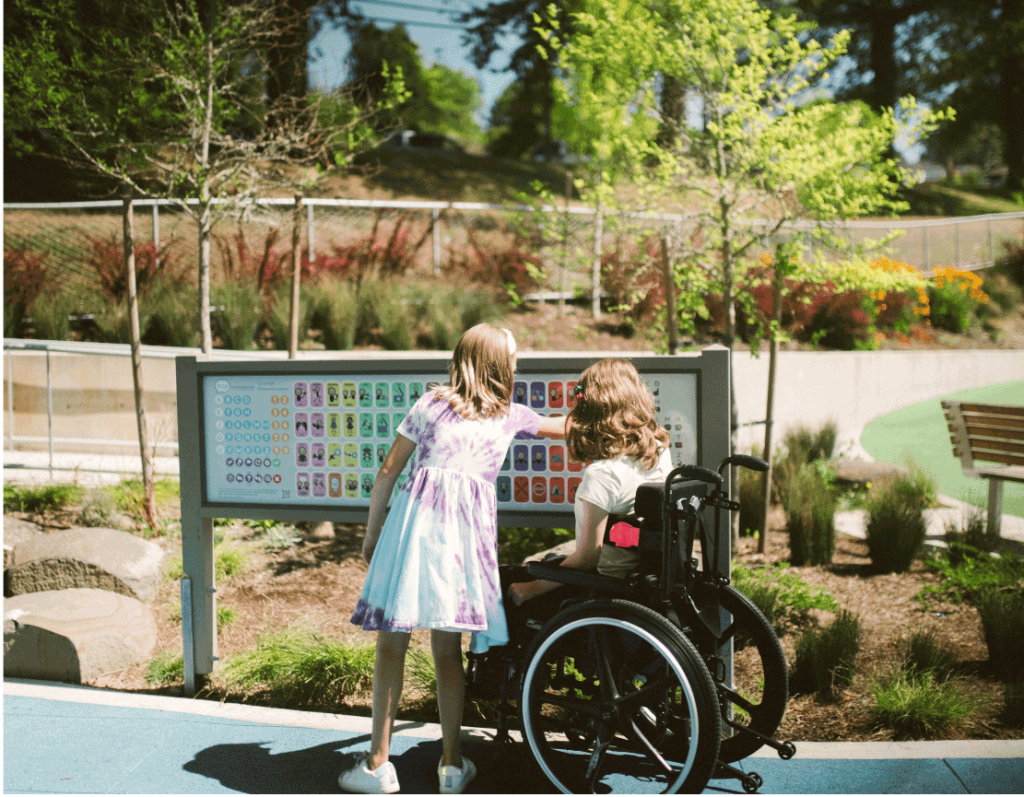
How do I find a PMR campsite?
A number of resources can help you find the right accommodation and environment for your needs:
Disabled people’s associations and specialized websites
Associations such as APF France Handicap and platforms such as Jaccede list suitable locations and provide advice.
Specialized guides
- The Michelin guide “Vacances accessibles en France” (March 2024) was designed by a team of nine people, including three with motor disabilities, to accompany people with reduced mobility. It lists over 1,200 accessible sites and activities in 30 destinations, including accommodation, restaurants, cultural visits and sporting activities.
- The Handitourisme Petit Futé 2024 guide offers practical advice and adapted addresses for accessible tourism, both in France and abroad.
Tourist offices
They can give you information on local campsites that are accessible, as well as on the various label sites.
Quality labels
- The Tourisme et Handicap label guarantees that the establishment complies with strict accessibility standards for different types of disability (motor, visual, hearing, mental).
- The Destination pour tous (Destination for All) label is awarded to local authorities that offer an accessible and adapted tourism offer for disabled people and those accompanying them. DPT-labeled towns must make their tourist sites accessible and facilitate travel for people with disabilities.
- The Handiplage label assesses the accessibility of beaches for all types of disability. There are four levels, depending on the facilities available: access for handiplagists, sanitary facilities, showers, changing rooms and audio-beach systems for the visually impaired. On the Handiplage website, an interactive map allows you to locate these beaches and consult the facilities on offer.
? Read also: Tourism quality labels
Criteria for choosing a PMR campsite
Level of adaptation
Not all PRM campsites are created equal. Ask about facilities and services, such as the specific equipment provided (beach wheelchairs, pool lifts, magnetic loops, shower chairs, etc.). Trained and aware staff can also greatly enhance the experience.
Geographical location
Choose a campsite close to the shops and places you want to visit, as well as medical services.
Adapted activities
Ask about inclusive activities, such as accessible swimming pools, wheelchair-accessible trails, or adapted water sports, depending on what you’re looking for!
Reviews from other holidaymakers
Testimonials from other people with disabilities are invaluable, revealing the quality of the experience on offer.
? For disabled people and their families, vacations should not be a luxury, but a breath of fresh air. Take the time to study the range of PMR campsites on offer to guarantee you the best possible vacation, in a setting that’s well thought out for everyone.
Camping PMR: regulations and obligations
In France, regulations require all establishments open to the public (including campsites) to comply with certain accessibility standards.
These are defined by Law 2005-102 of February 11, 2005 on equal rights and opportunities, participation and citizenship for disabled people.
It should be noted that the regulations applicable to campsites, which are classified as both ERP for their built structures (reception, restaurant) and IOP (installations open to the public) for their outdoor areas, are special.
Campsite obligations as an ERP
Like any ERP, the campsite has several obligations, including :
- entrances and the interior of common areas (reception, restaurant, swimming pools) must be accessible and adapted;
- staircases must include devices to facilitate their use by the blind or partially sighted;
- a dedicated parking space must be located in the immediate vicinity of the reception area and linked by an accessible walkway;
- communal sanitary facilities must include at least one adapted cubicle for every 20 pitches.
Campsite obligations as an IOP
With regard to the campsite’s classification as an IOP, the text stipulates that :
- mobile homes and light dwellings are not considered to be buildings within the meaning of the Building Code and are therefore not subject to the standards applicable to conventional buildings;
- that at least oneadapted accommodation unit must be accessible to people with disabilities;
- the campsite must have an adapted area fully equipped to meet the needs of disabled people and those with reduced mobility (pathways, sanitary facilities, etc.), located as close as possible to one of the main entrances.
? Some campsites go beyond these legal requirements to obtain certifications such as the famous Tourisme et Handicap label.
Vacations and disability: progress and challenges
Key figures :
- According to IDDHEA, nearly 12 million people in France are disabled. Of these, 67% deplore the lack ofaccessibility in public places.
- According to figures from theObservatoire des inégalités, 40% of adults with disabilities do not go on vacation. The reason? Economic constraints and obstacles to accessing tourist sites.
- 20% of campsites in France offer facilities adapted for people with reduced mobility (PRM). This figure is rising steadily, but is still insufficient to meet demand.
- By the end of 2023, more than 4,300 structures had been awarded the Tourisme et Handicap label (including campsites). This represents an increase of 18% compared to 2022.
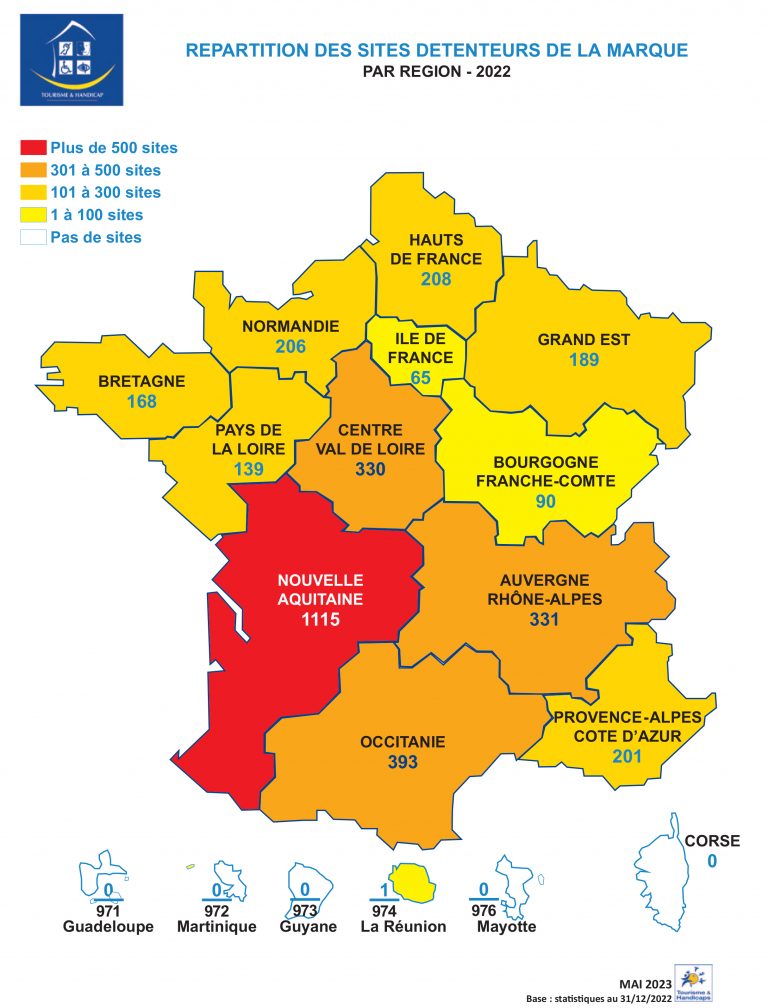
Progress made
More and more quality labels
The Tourisme et Handicap label is increasingly recognized and adopted by campsites. Others have since been created.
Infrastructure improvements
Many campsites have invested in facilities for PRMs.
Raising awareness among professionals
Tourism professionals are increasingly aware of the challenges of accessibility and are trained in best practices.
The challenges ahead
Heterogeneous offers
From the oldest to the most modern facilities, and depending on individual commitment, levels of accessibility vary considerably from one campsite to another, even among those with a quality label.
Lack of visibility
It is sometimes difficult for people with disabilities to find reliable and comprehensive information on accessible campsites.
Cost of PRM facilities
Adapting a campsite to meet accessibility standards represents a major investment for owners.
More inclusive tourism: an opportunity for all
Campsites accessible to people with reduced mobility are part of an approach that benefits both disabled holidaymakers and tourism professionals.
Indeed, accessibility is no longer an option: it’s an imperative and a path to the future. Against the backdrop of an ageing population, it represents an opportunity to guarantee the sustainability, quality and competitiveness of the tourism sector.
Welcoming visitors with special needs should be seen as a lever for attracting new customers, rather than a constraint. By opening up tourism to a wider public, the sector benefits directly from an increase and diversification in the number of visitors.
In addition, campsites can broaden their local customer base, and at the same time reduce their carbon footprint by promoting local holidays.